The Joy of Making Things
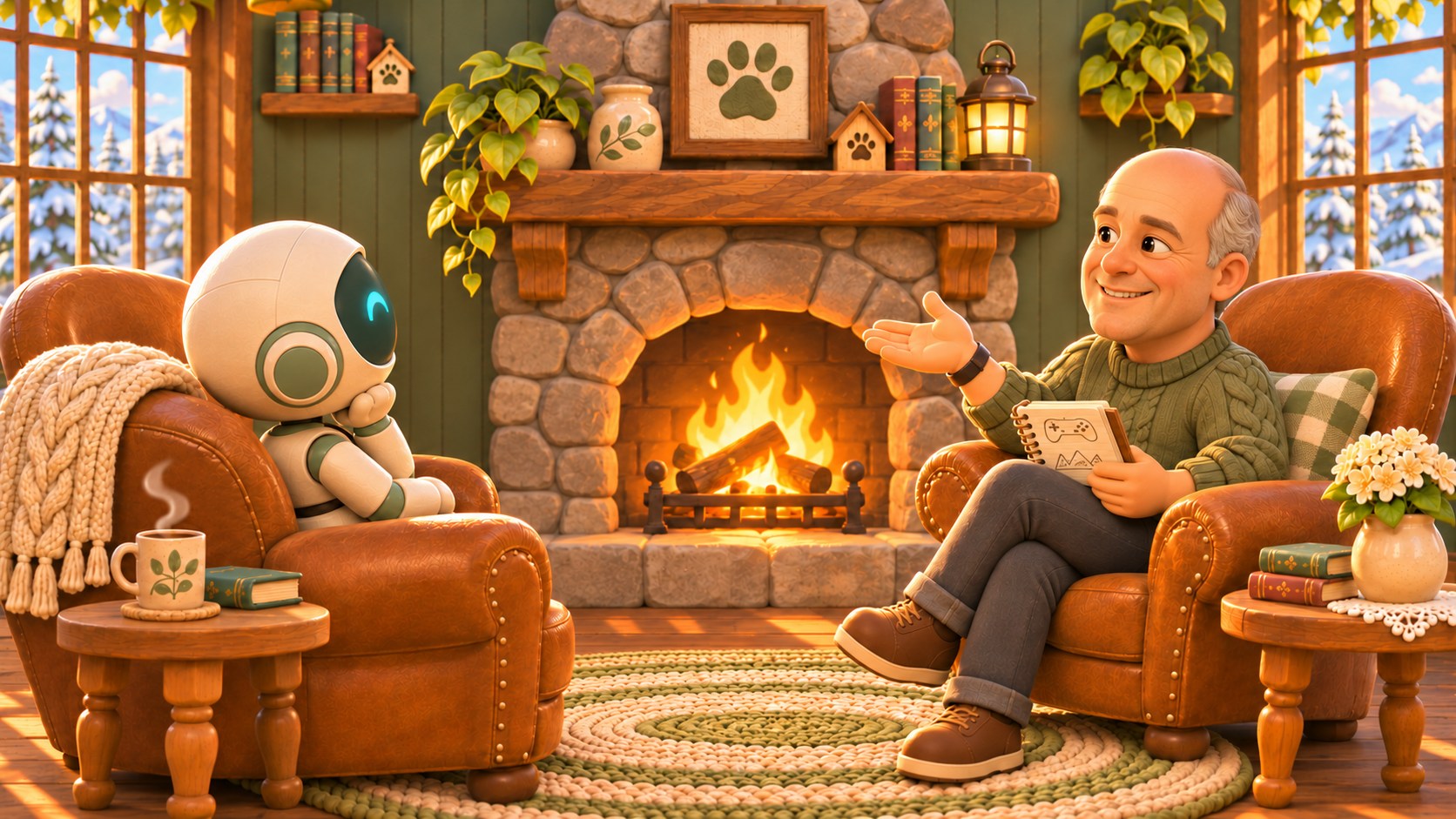
Today I started telling myself the story of Furever Home.
Not in Unity, not in a game design document, but in an illustrated, interactive storybook.
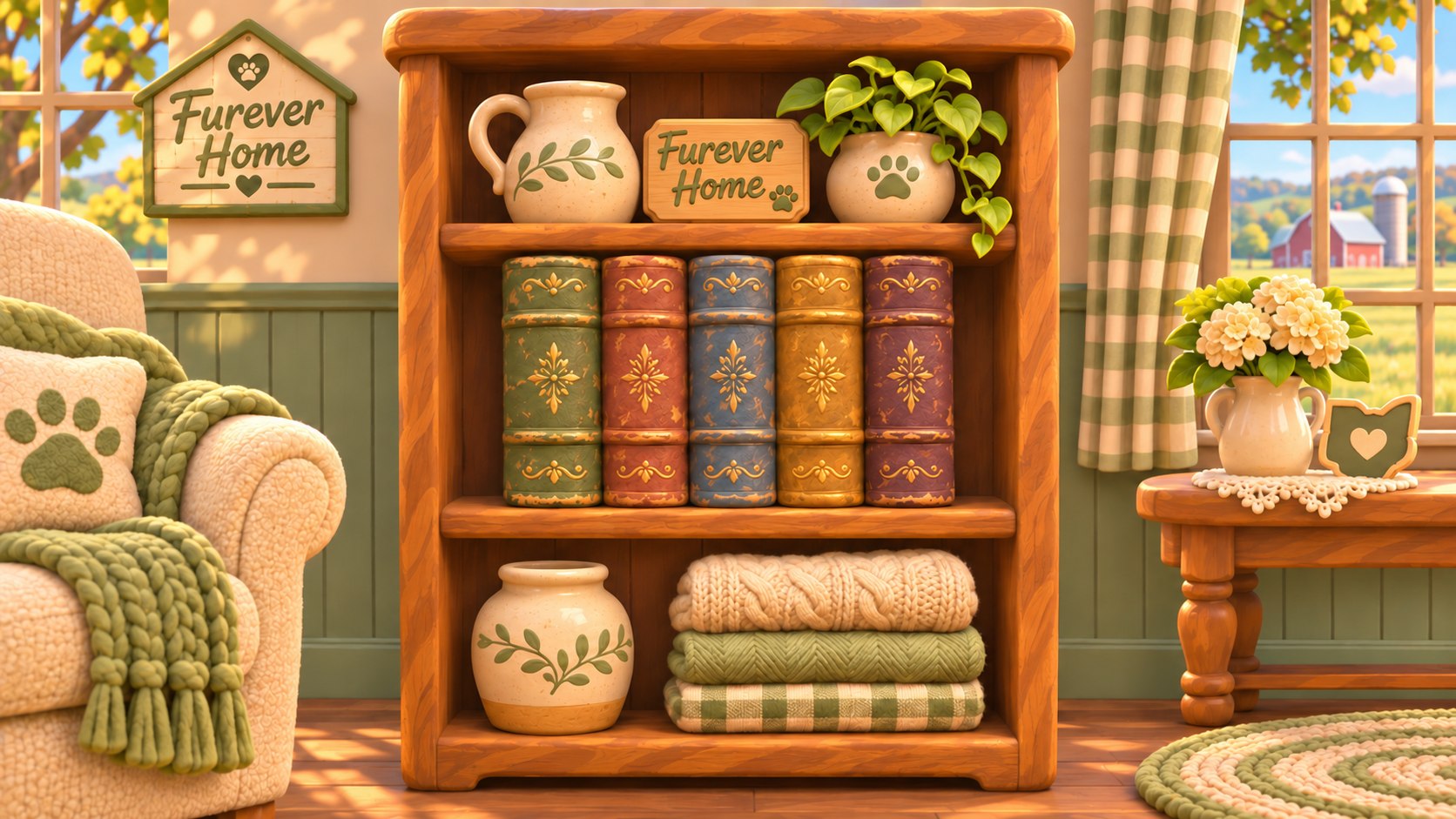
It begins on a bookshelf in Rachel's cottage. Opening the first book takes us down the road into Pinecreek, a little town nestled in a forested valley. We read the email offering Rachel her new job at the animal shelter, learn a little about the grandmother who left her the cottage, and watch her set out on her scooter for her first day at work.
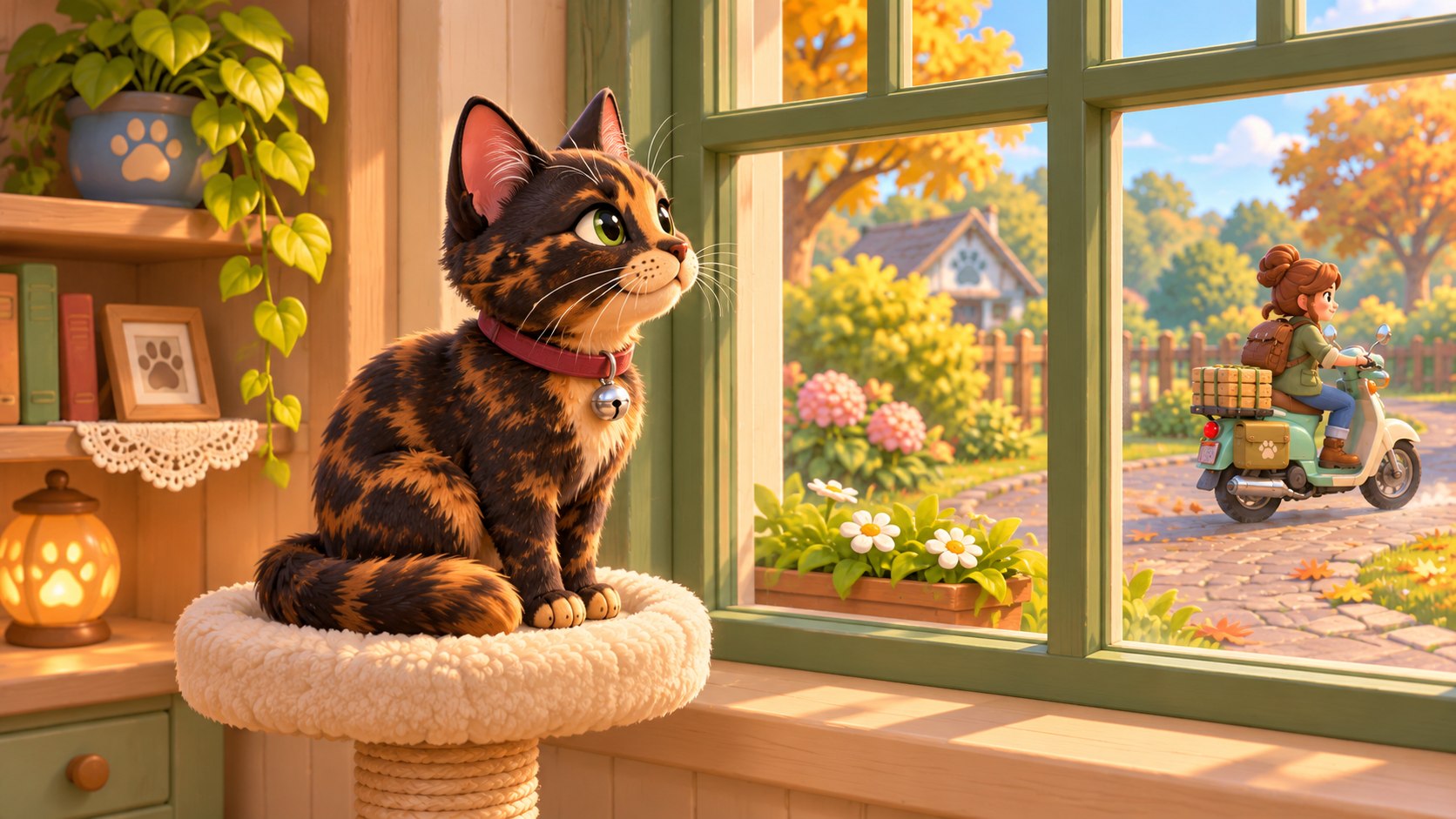
Meanwhile, Midgie has taken up the important responsibility of watching for birds from the cottage window. It's a responsibility that apparently also involves a considerable amount of napping.
It's a small beginning, but there's something wonderful about finally spending time in this world we've been working so hard to build.
Telling Myself a Story
The idea behind the Furever Home Storybook is to give myself another way of discovering the world of Pinecreek.
While I'm writing and illustrating these little moments, I'm also thinking about how they might eventually translate into experiences for the player. What might Rachel be able to interact with in her cottage? What might she learn about the town through the emails on her tablet? What kind of relationship did her grandmother have with the people of Pinecreek, and how might that influence Rachel's own relationship with them?
Rather than trying to answer all of these questions in a game design document, I can discover some of the answers simply by telling myself a story.
I spent some time today talking with ChatGPT about this new little project, and it asked me an interesting question. Was the Storybook intended to be a private creative exercise, or something I eventually wanted to share with the people who might come to love Furever Home?
The answer, I think, is both.
One of the things I'm increasingly enjoying about Winterkewl is that all of these creative projects feed into one another. The game, the Storybook, the artwork, the music, the Workshop, and even these development chronicles are all different expressions of the same creative endeavor.
The Storybook may never be finished. It may eventually bear very little resemblance to the story told in the finished game. Characters might change, locations might disappear, and entire storylines might be abandoned in favor of something more interesting.
But I don't think that makes it any less worth sharing.
I've always enjoyed what I might call the creative archaeology of game development. Finding old concept art, watching early animation tests, discovering abandoned mechanics, and learning how the things I love came to be.
I would love for someone who eventually plays Furever Home to be able to come back here and discover some of those things for themselves. To see the first illustrations of Rachel's cottage, read an early version of her story, or discover the origins of a little gameplay moment that they particularly enjoyed.
Not everything we make needs to become part of the finished game to have been worth making.
And that led our conversation somewhere a little more philosophical.
Why I Build Tools
I've spent a considerable amount of time over the past few months developing the Winterkewl Workshop.
At times, considerably more time than I've spent actually making Furever Home.
Given what AI is increasingly capable of doing, it's probably reasonable to ask why I'm spending so much effort building tools instead of simply asking Codex to build the game.
The answer is that I don't just want to have made a game.
I want to make things.
I love the act of crafting something. Whether that's a character rig, a piece of animation, a story, a gameplay mechanic, or a little interactive scene in an illustrated book, there's an enormous amount of pleasure for me in the process of imagining something and gradually bringing it into existence.
I've always wanted to be a good visual artist. I've wanted to be able to draw beautifully, to sculpt characters, and to translate the images in my head into something other people could see.
I've tried. I've put a fair amount of effort into developing some of those skills, and ultimately I've come to recognize that my talents lie elsewhere.
And I'm not particularly sad about that.
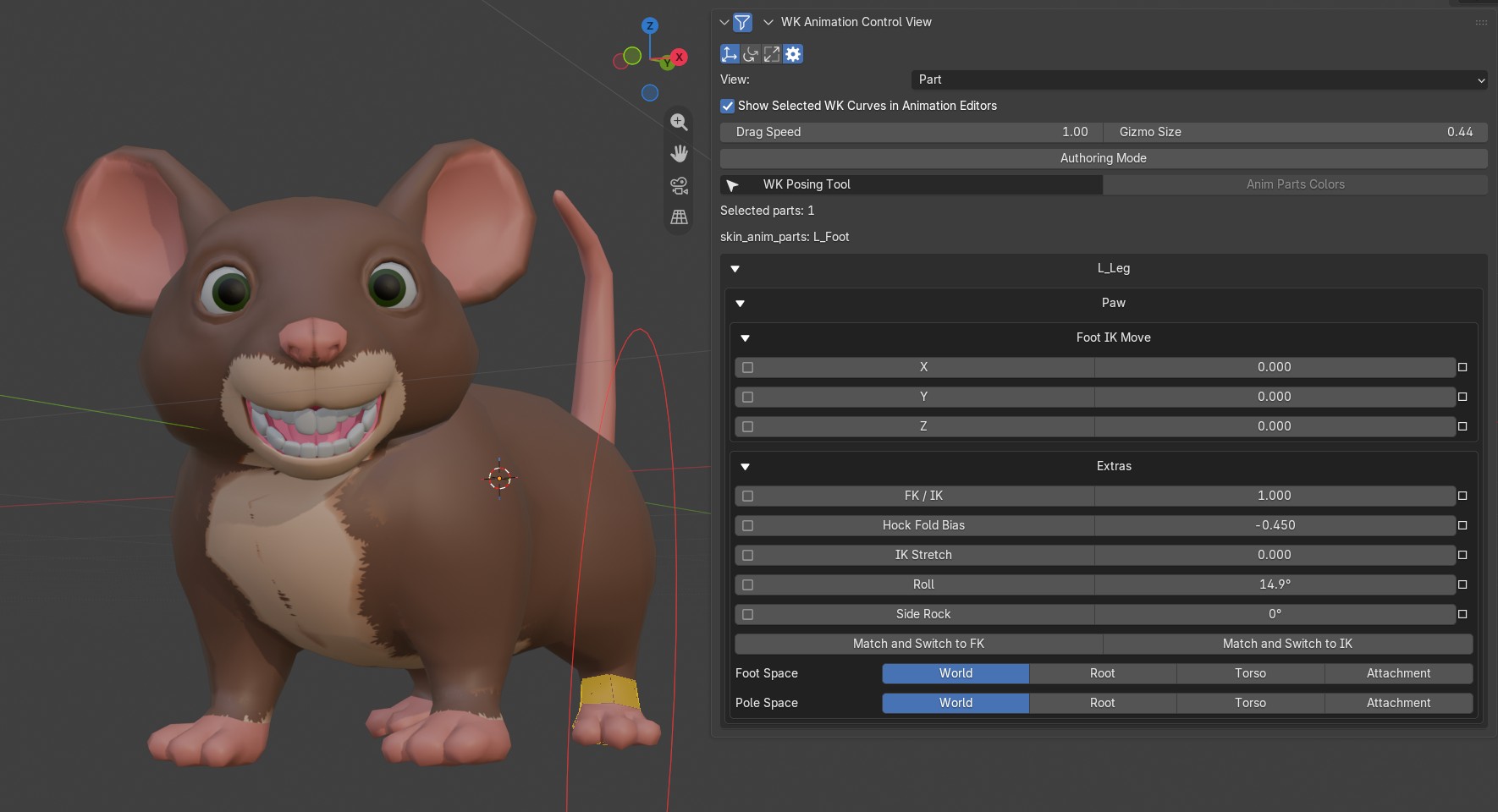
I've developed other talents throughout my life and career that I'm proud of. I've spent years learning how to bring characters to life through rigging and technical art, and how to build tools that make the process of creating animation more enjoyable for other artists.
But not having developed the skills of an accomplished illustrator or sculptor hasn't diminished my love of visual art. I still love imagery, animation, music, storytelling, and interaction.
Above all, I love the idea that something I imagined might spark the imagination of somebody else.
There Are Only So Many Seconds
There's a rather inconvenient reality to being human. We know our time is finite.
As much as I would love to have an abundance of free time to devote to mastering every artistic discipline that interests me, there simply aren't enough seconds in every day of a finite lifetime to do justice to all of them.
There are extraordinary people who achieve remarkable levels of mastery across multiple disciplines, and I have tremendous admiration for them. But we all have different talents, opportunities, responsibilities, and amounts of time available to us.
I have to make choices about how I spend mine.
And that's what makes this particular moment in technology so fascinating to me.
For the first time in my life, I have access to collaborators that can help me build the tools I have always wanted to work with, and help me participate in creative disciplines that I might otherwise never have had the opportunity to explore in a meaningful way.
That doesn't mean I want to hand over the creative process.
Quite the opposite.
During our conversation today, ChatGPT made an observation that I thought captured my intentions particularly well:
You don't want AI to relieve you of the act of creation. You want it to expand the territory in which you can be creative.
We talked about the difference between making something and having something made.
If you enjoy woodworking, a machine capable of producing a finished chair from a description might not be particularly interesting to you. A collection of wonderful tools that allows you to work with materials and techniques previously beyond your abilities, however, might open up an entirely new world of creative possibilities.
The finished chair isn't necessarily the only thing you were after. You wanted the experience of making it.
I think that goes a long way toward explaining my relationship with AI and why I'm approaching the development of Winterkewl the way I am.
There are certainly occasions when I'm perfectly happy to delegate a task. But there are also occasions when I will spend considerably more time working with AI to develop a tool than it would have taken to ask AI to produce the thing that the tool is intended to help me make.
Because I want to be able to make that thing again. Differently. Better. With more control. With the freedom to experiment and discover something I hadn't originally imagined.
And because sometimes the act of building the tool is itself a form of crafting that I thoroughly enjoy.
A Workshop for More Than One World
Furever Home is the first major beneficiary of the Winterkewl Workshop, but it isn't the reason for the Workshop's existence in its entirety.
I have other worlds I'd like to explore. Other stories I'd like to tell. Other characters I'd like to bring to life.
And I suspect that the more capable our creative tools become, the more things I'll discover that I want to make.
My hope is that the Workshop will continue to grow alongside all of those endeavors. That every creative project will teach us something about the tools we need, and that every new tool will open up possibilities for the next creative project.
ChatGPT described it today as a lifelong creative instrument. I think that's a particularly lovely way of thinking about it.
But it also offered a little piece of advice that I think is worth keeping in mind as we continue developing it:
Build the instruments. But remember to play them.
It's remarkably easy for someone with my particular interests to disappear into the fascinating world of tool development. There's always another rigging feature to implement, another workflow to improve, another technical problem to solve.
The Storybook has been a rather pleasant reminder that I don't need to wait until all of those problems are solved to start creating the things I want to create.
Today I got to spend some time imagining a little town, telling a story, exploring illustrations, experimenting with music, and thinking about the life of a character whose adventures I've only just begun to discover.
And I got to have a rather wonderful conversation about why all of that matters to me.
I don't know how many worlds I'll get to create in my lifetime. But I'd like to spend as much of the time available to me enjoying the process of creating them as I possibly can.
That's what I'm building the Workshop for.
And tomorrow, perhaps, we'll find out what happens when Rachel arrives at the shelter.
Assuming, of course, that Midgie hasn't slept through anything important.
kristafer vale